
Residencies and Secondments for Research and Entrepreneurship
The Quantum Biomedical Sensing (Q-BIOMED) Research Hub is the UK’s first and only National Quantum Technologies Research Hub dedicated to health. We bring together 6 universities (UCL, Cambridge, Warwick, Oxford, Cardiff, and Heriot-Watt) alongside 35 partners from industry, clinical practice, charities, national and international organisations, NHS trusts, and NIHR Biomedical Research Centres.
Our mission is to accelerate the development and application of new quantum sensors for medical imaging, ultra-sensitive quantum-enhanced in-vitro diagnostics, novel surgical treatment interventions, and quantum sensing technologies for basic biomedical research.
About this funding call
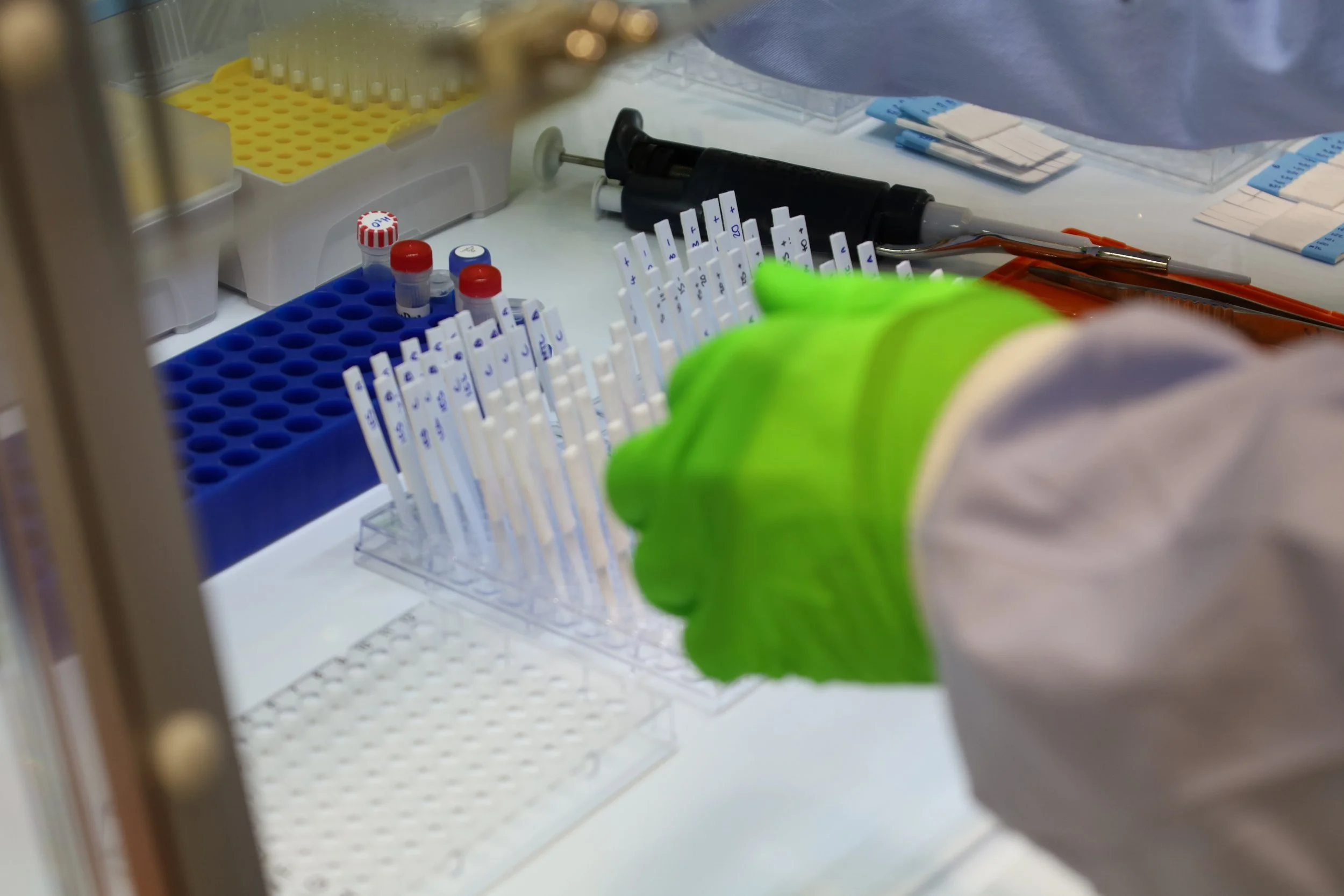
As part of our Training and Skills programme, this funding call aims to strengthen interdisciplinary understanding through short-term residencies, enabling researchers and clinicians to gain experience across different environments. Quantum researchers can spend time in clinical or industry settings, while clinicians can engage with research laboratories to learn about quantum sensor technologies.
Call opens: 21 September 2026
Application deadline: 15 November 2026
Decision notification: December 2026
Funding available from: January 2026
Eligibility: Open to all UK ECRs (Master’s students, PhD researchers, and postdoctoral fellows), including clinical and non-clinical ECRs. Applicants must not hold a Principal Investigator or group leader position. Placements may be in research, clinical, or industry environments, but all proposals must relate to quantum sensing applications in the life sciences.
How to apply
To apply, please submit the completed application form (in Word format) to Dr Adam Callan-Sidat: a.callan-sidat@ucl.ac.uk.
If you have questions about the scheme, please contact Dr Helena Knowles: hsk35@cam.ac.uk.
Conditions
Placements may be in research, clinical, or industry environments, but all proposals must relate to quantum sensing applications in the life sciences.
Open to all UK ECRs (Master’s students, PhD researchers, and postdoctoral fellows), including clinical and non-clinical ECRs. Applicants must not hold a Principal Investigator or group leader position.
Applicants are not required to be from a Q-BIOMED partner institution (UCL, Cambridge, Warwick, Oxford, Cardiff, or Heriot-Watt) or seeking to be hosted by one.
Applicants not affiliated with, or hosted by, a Q-BIOMED academic group, must have their proposals supported by one. The supporting group will act as a sponsor by contributing to the project design and engaging with project outcomes (e.g. through a follow-up discussion). Applicants who do not currently have links to a Q-BIOMED academic group are encouraged to submit a brief summary of their proposal to info@qbiomed.org, and we will aim to connect them with an appropriate group.
Funding covers up to two months’ salary (at 100%) while working away from your home institution, based on your current salary, with a maximum cap of £39,906 p.a. (without London Allowance) or £45,103 p.a. (with London Allowance). Applicants whose current salary exceeds this cap may request the host institution to cover any shortfall, supported by a letter included with the application.
Matched funding and alignment with other internships and training opportunities is encouraged, not required, and will be viewed favourably in selection.
Duration: Up to 2 months.
Awardees must submit a written report summarising the activities and outcomes after the placement.
Outputs (e.g. publications) must acknowledge the funding with "This work was supported by the Engineering and Physical Sciences Research Council through the UK Quantum Biomedical Sensing (Q-BIOMED) Research Hub [grant number: EP/Z533191/1]".