
New study showcases the promise of OP‑MEG for epilepsy care
A new study, led by our Deputy Director Umesh Vivekananda and published in Clinical Neurophysiology, has offered an insight into how using optically pumped magnetometers (OPMs) for brain imaging could enhance diagnostic capabilities in epilepsy. The research team at UCL have shown that OPM-based magnetoencephalography (OP-MEG) can successfully record seizures, even when patients move, allowing for more natural and patient friendly monitoring.
Mapping seizure activity in the brain
For people with epilepsy, capturing seizures on brain recordings is crucial for helping to identify where in the brain seizures begin. Traditionally, this has been done with EEG or SQUID-based MEG, however these systems have limitations: EEG can struggle to record deep brain regions, and SQUID-MEG requires large, fixed sensors cooled with liquid helium, requiring patients to keep very still.
As OP-MEG uses lightweight sensors that sit directly on the scalp, it can provide better signal quality, more flexibility and greater tolerance to movement. Previous studies have shown that OP-MEG improves detection of epileptiform discharges (abnormal electrical patterns between seizures) in children and can pick up activity from deep brain regions.
This new paper extends those findings to ictal recordings – capturing brain activity during seizures. Researchers recorded seizures from two adult epilepsy patients, both of whom had normal routine EEGs and therefore needed longer, more detailed monitoring. Using a comfortable, lightweight OP‑MEG setup inside a magnetically shielded room at UCL, the team obtained clear ictal signals even when patients showed varying levels of movement.
OPM sensors were mounted on personalised 3D-printed helmets shaped from each patient’s MRI and motion tracking cameras allowed the team to account for head movement without compromising data quality. This set up was able to successfully record seizure activity that conventional EEG had missed.
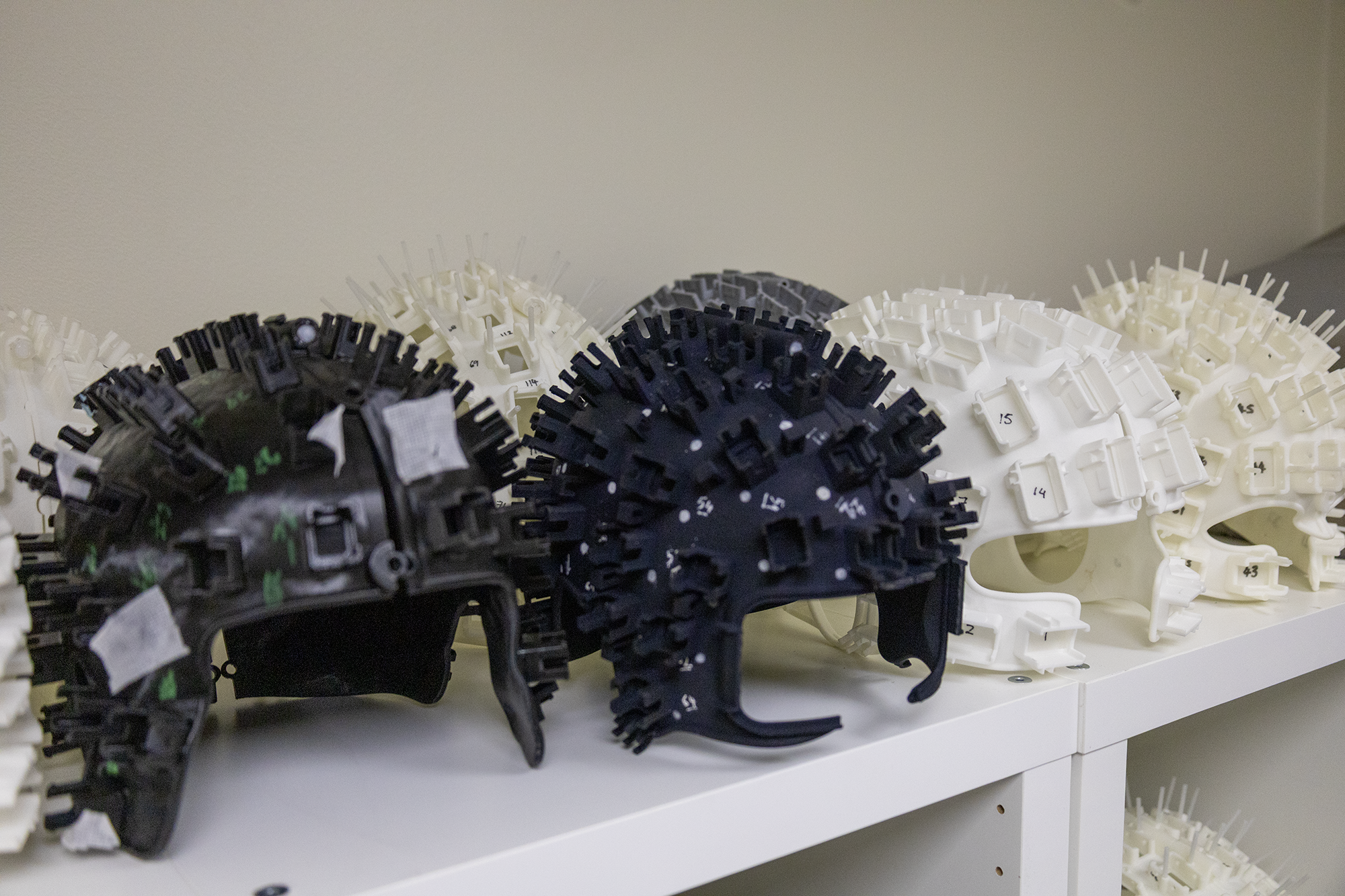
OPM sensors were mounted in personalised 3D printed helmets
Patient-friendly monitoring
One of the biggest advantages of OP‑MEG is that the technique allows patients to sit comfortably without head restraints, making long recordings easier and more naturalistic. As well as allowing for more patient friendly seizure monitoring, this technique could also mean improved access for groups who struggle to remain still, such as children, people with mobility challenges, or those with frequent seizures.
These early insights add momentum to the growing body of work showcasing OP‑MEG’s clinical promise, illustrating that clear, movement‑tolerant seizure recordings are achievable and paving the way for larger studies and eventual integration into clinical practice.