
The Power of Quantum: Exploring the future of sensing for healthcare
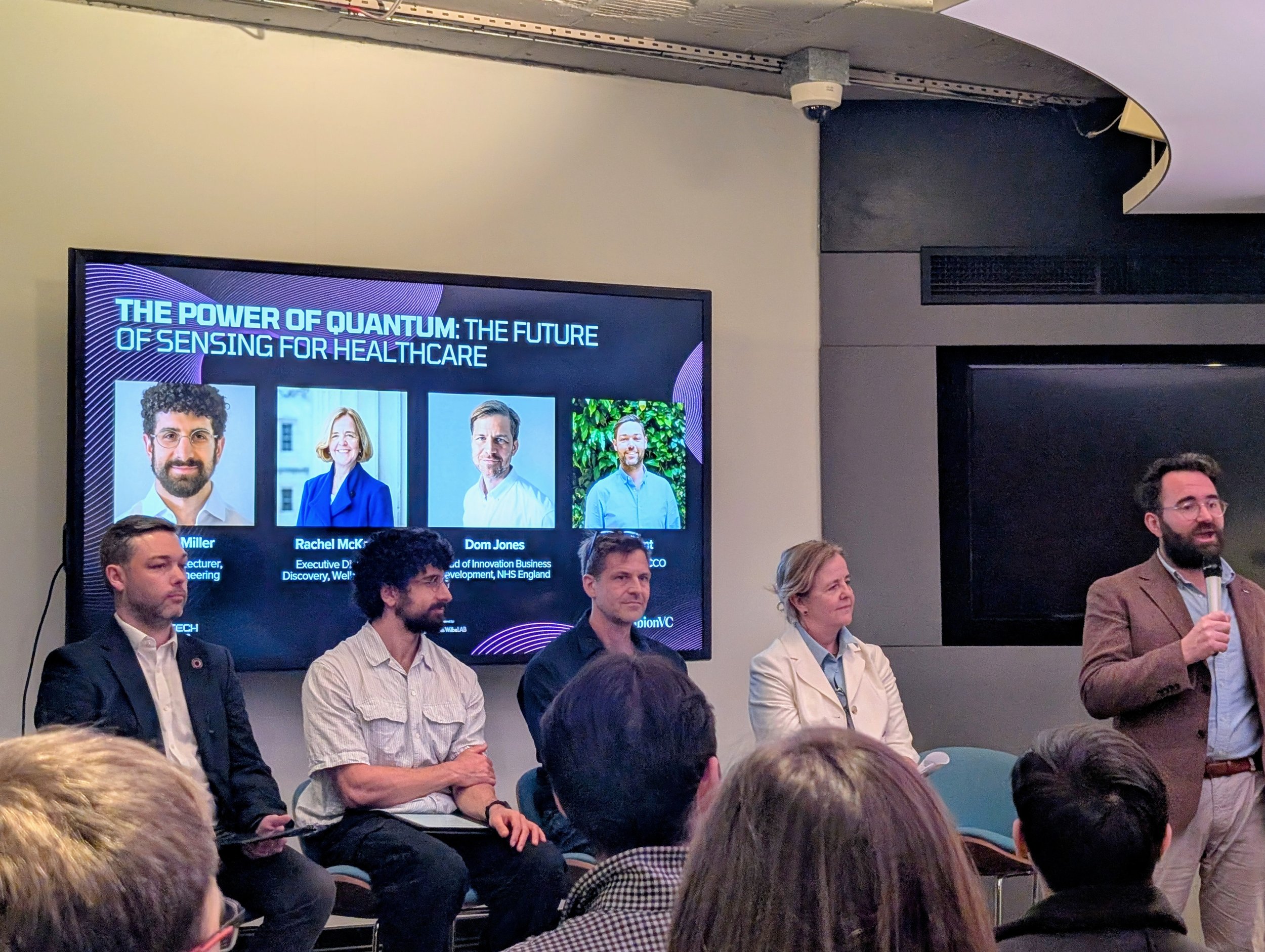
Leaders from across the quantum, healthcare, and innovation communities came together last night at IDEALondon for The Power of Quantum: The Future of Sensing for Healthcare. The panel - chaired by Dr Rob Thompson, Vice-Dean (Enterprise), UCL Engineering - featured Q‑BIOMED Co‑Investigator Dr Ben Miller; Professor Rachel McKendry, Executive Director of Discovery at the Wellcome Trust; Dom Jones, Head of Innovation and Business Development at NHS England, and Dr Ben Hunt, Co‑Founder and CCO at Siloton Limited.
Together, they explored how emerging quantum sensing technologies could transform clinical practice, the challenges ahead, and the collaborations needed to accelerate progress.
Why quantum sensing matters
The discussion opened with a look at the advantages of quantum sensing, with Professor Rachel McKendry describing it as “an exciting time for the field.” Noting the transformative impact of technologies such as MRI, she explained that next‑generation quantum sensors could have an even greater impact, holding the potential to probe biological systems with even greater sensitivity and precision, but the field is still at an early stage.
The panel agreed that making this potential real will require deep interdisciplinary collaboration. As quantum technologies evolve, researchers must be equipped to work across physics, engineering, biology, and clinical practice to ensure emerging tools address genuine healthcare needs.
Training the next generation
A recurring theme throughout the evening was the need to cultivate a workforce capable of bridging disciplines. Panellists emphasised the importance of training researchers who can move fluently between quantum science and clinical realities.
This includes not only developing the technical skills needed to build quantum sensors, but also embedding a strong understanding of clinical workflows, unmet needs, and the healthcare system into researcher training. Doing so will ensure quantum innovations can be integrated into real‑world practice rather than remaining confined to the lab.
Identifying and aligning clinical priorities
The conversation also explored how clinical challenges must be mapped and embedded into the entire innovation pathway, from national strategy and research funding to evidence generation and regulatory frameworks.
Panellists highlighted the role of the UK’s national quantum hubs, such as Q-BIOMED, in aligning these efforts, bringing together interdisciplinary teams and fostering collaboration across academia, industry, and healthcare.
Listening to patients early
Siloton’s Ben Hunt spoke to the critical role of early patient engagement. Involving patients from the beginning ensures that their needs, concerns, and lived experiences shape the direction of technological development. This feedback is invaluable for designing tools that are usable, acceptable, and beneficial in day‑to‑day healthcare settings.
Navigating adoption and integration in the NHS
Turning to the healthcare system, Dom Jones addressed the complexities innovators face when trying to integrate new technologies into the NHS.
He stressed the importance of providing tailored support at the right moments in the innovation journey - from regulatory guidance to clinical champions - so that promising tools can progress smoothly through development and evaluation. The Innovator Passport and National HealthTech Access Pathway were highlighted as examples of recent initiatives designed to give innovators clearer, more predictable routes into the system.
A collaborative future and the UK advantage
The panel concluded by reflecting on the UK’s strong position in the global quantum landscape. The country benefits from a diverse and highly skilled talent pool, world‑leading quantum research, and sustained government investment that supports the field from basic science through to commercialisation.
This combination of diversity, collaboration and national commitment - visible in programmes such as the National Quantum Technologies Programme and the network of quantum hubs - was recognised as one of the UK’s greatest strengths. By continuing to invest in interdisciplinary research, clinical integration and patient‑centred innovation, the UK is well placed to lead the next wave of quantum‑enabled healthcare breakthroughs.